Stop Getting Garbage from ChatGPT: The Marketer's Prompting Playbook
TL;DR
ChatGPT produces stronger marketing output when it receives clear, structured direction. Vague prompts often lead to generic or inconsistent content, while well-defined prompts help align the response with the brand, audience, campaign objective, and intended format.
Effective marketing prompts should include a clear hook, audience context, brand voice, campaign goal, constraints, preferred structure, and relevant data. AI can support ideation, drafting, and content development, but the final quality still depends on human review, strategic judgment, and brand alignment.
In short, better prompting is better briefing. The more precise and strategic the input, the more useful and actionable the output becomes.
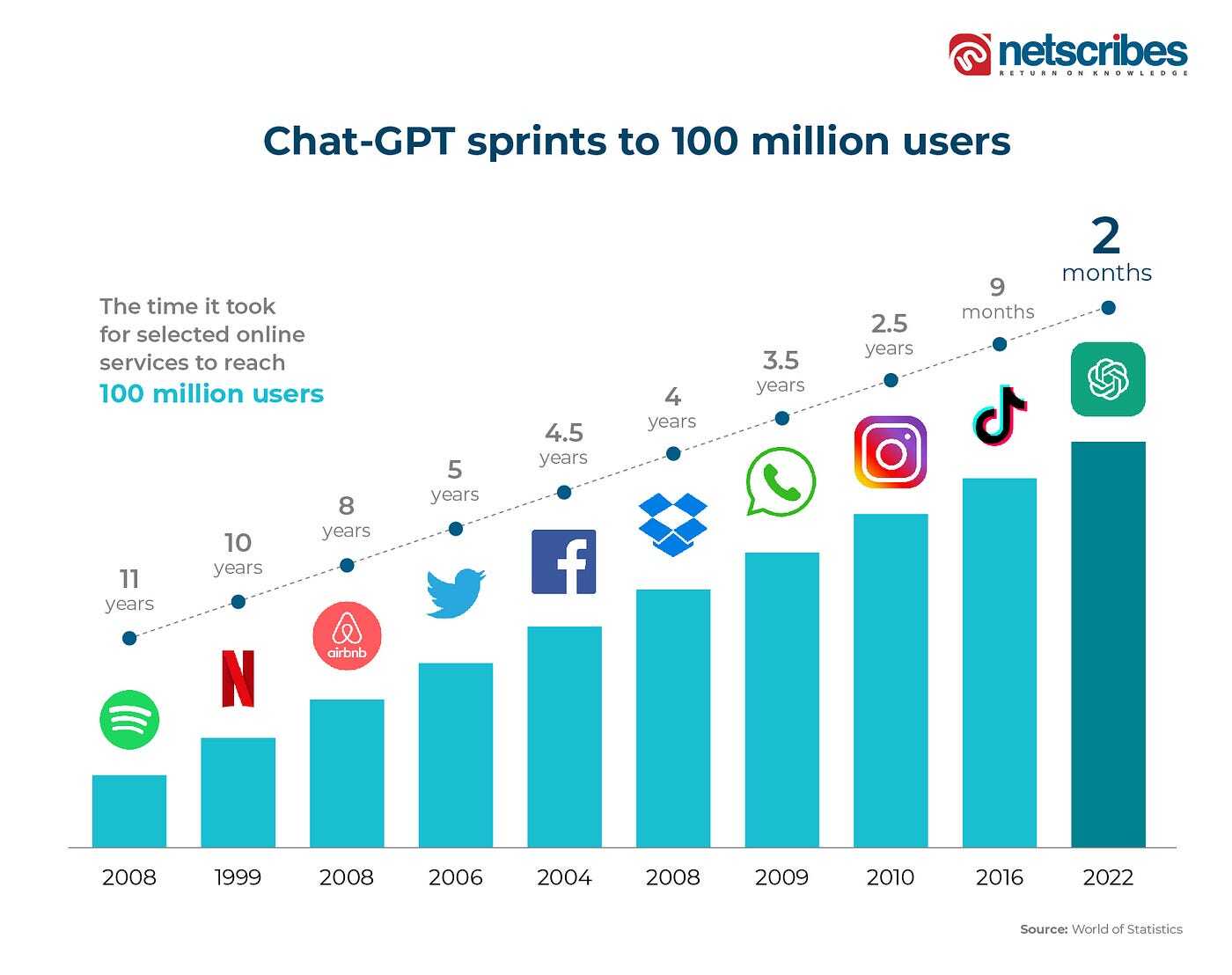
In late 2022, something strange happened to the marketing industry. A chatbot called ChatGPT went viral, and almost overnight, a skill nobody had heard of became one of the most talked-about abilities in the job market: prompt engineering.
At first, it sounded like a joke. Typing questions into a chatbox is a skill now? Job boards briefly listed "prompt engineer" roles with six-figure salaries, and LinkedIn flooded with self-declared "AI whisperers." Skeptics rolled their eyes and predicted the whole thing would disappear as soon as AI models got smarter. Believers argued the opposite — that knowing how to talk to AI would soon separate the marketers who thrive from the ones who fall behind.
A few years in, the results are clear — and honestly, both camps were a little bit right. The job title hype has cooled, but the skill itself has quietly become non-negotiable. Today, the vast majority of marketers use AI in their daily workflows, yet most of them share the same frustration: the output feels generic, robotic, and nothing like their brand. They blame the tool. They say "AI content just isn't good."
The gap between a marketer who gets bland, forgettable AI output and one who gets sharp, on-brand, publish-ready drafts usually comes down to a few sentences of instruction. There's a popular saying in the industry that captures this perfectly: you won't lose your job to AI — you'll lose it to someone who knows how to use AI better than you.
This playbook will make sure you're on the right side of that divide. In the next few minutes, you'll learn why your prompts are failing, the exact framework to fix them, and the techniques professional marketers use to turn ChatGPT from a garbage generator into their most productive team member.
Let's dive in.
What Makes a good ChatGPT prompt for Marketing ?
A good ChatGPT prompt is not just a question. It is a clear creative brief. If you give ChatGPT vague instructions, you will usually get vague, generic, and “garbage” output. But when you give it context, a clear goal, audience details, brand tone, and the format you want, the result becomes much more useful for marketing work.
For marketers, a strong prompt should include five key parts: role, context, objective, audience, and output format.
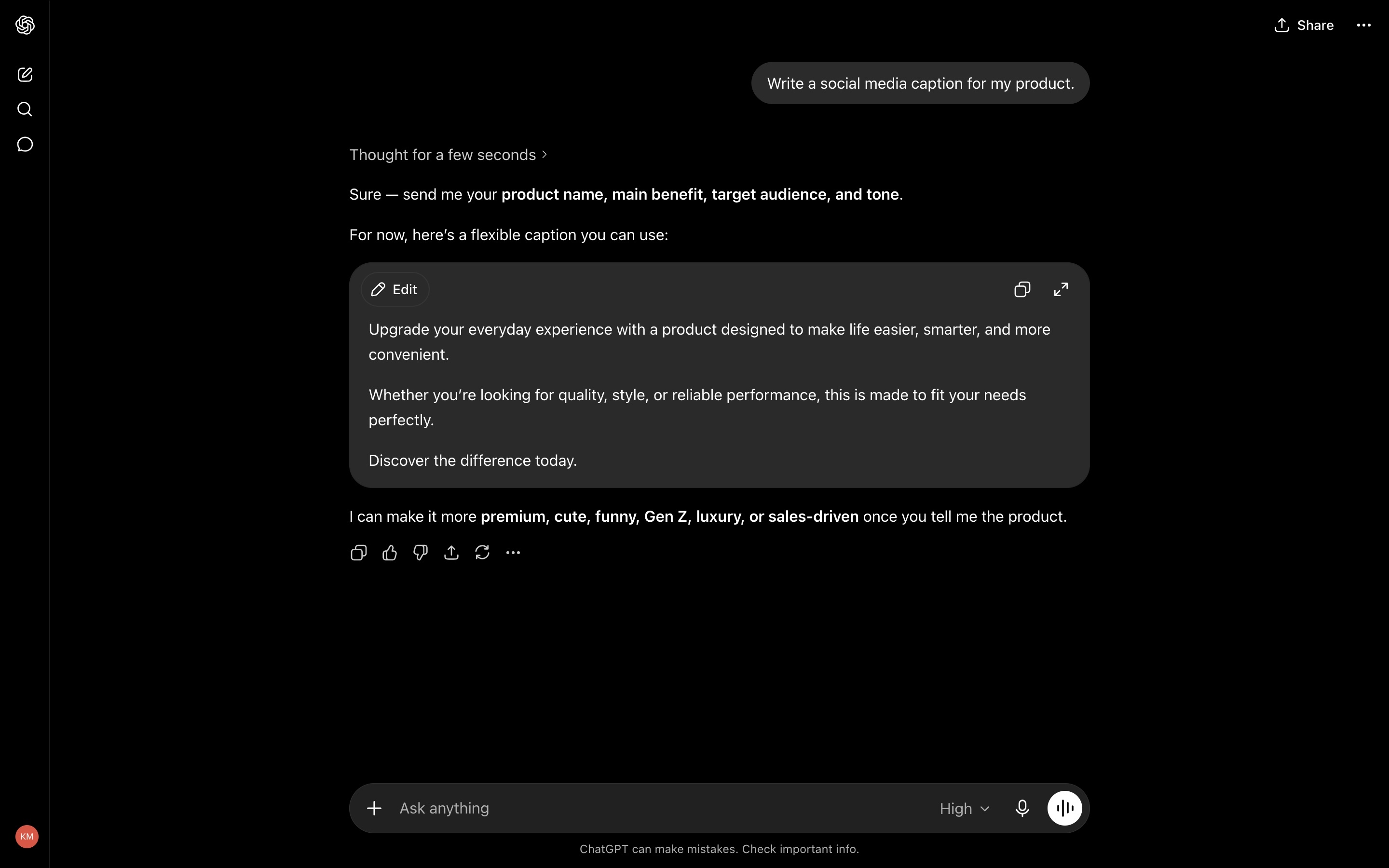
The prompt “Write a social media caption for my product” may look simple, but it is too vague to produce a strong marketing result. It does not tell ChatGPT what the product is, who the target audience is, which social media platform the caption is for, or what the main goal of the caption should be. As a result, the AI has to guess almost everything.
This kind of prompt usually leads to generic content because there is no clear direction. A caption for a skincare product will sound very different from a caption for a software tool, a restaurant, or a clothing brand. In the same way, a caption written for Instagram may not work well for LinkedIn or TikTok because each platform has a different audience, tone, and content style.
The prompt also does not include any marketing objective. Is the caption supposed to create awareness, promote a new launch, increase engagement, drive website visits, or encourage people to buy? Without knowing the goal, ChatGPT cannot shape the message properly. It may write something that sounds nice, but not something that supports a real marketing purpose.
Another weakness is that the prompt gives no brand tone or key message. It does not explain whether the caption should sound professional, friendly, funny, premium, emotional, or educational. It also does not mention the product’s main benefit, offer, feature, or call-to-action. Because of this, the final output often feels broad, flat, and disconnected from the brand.
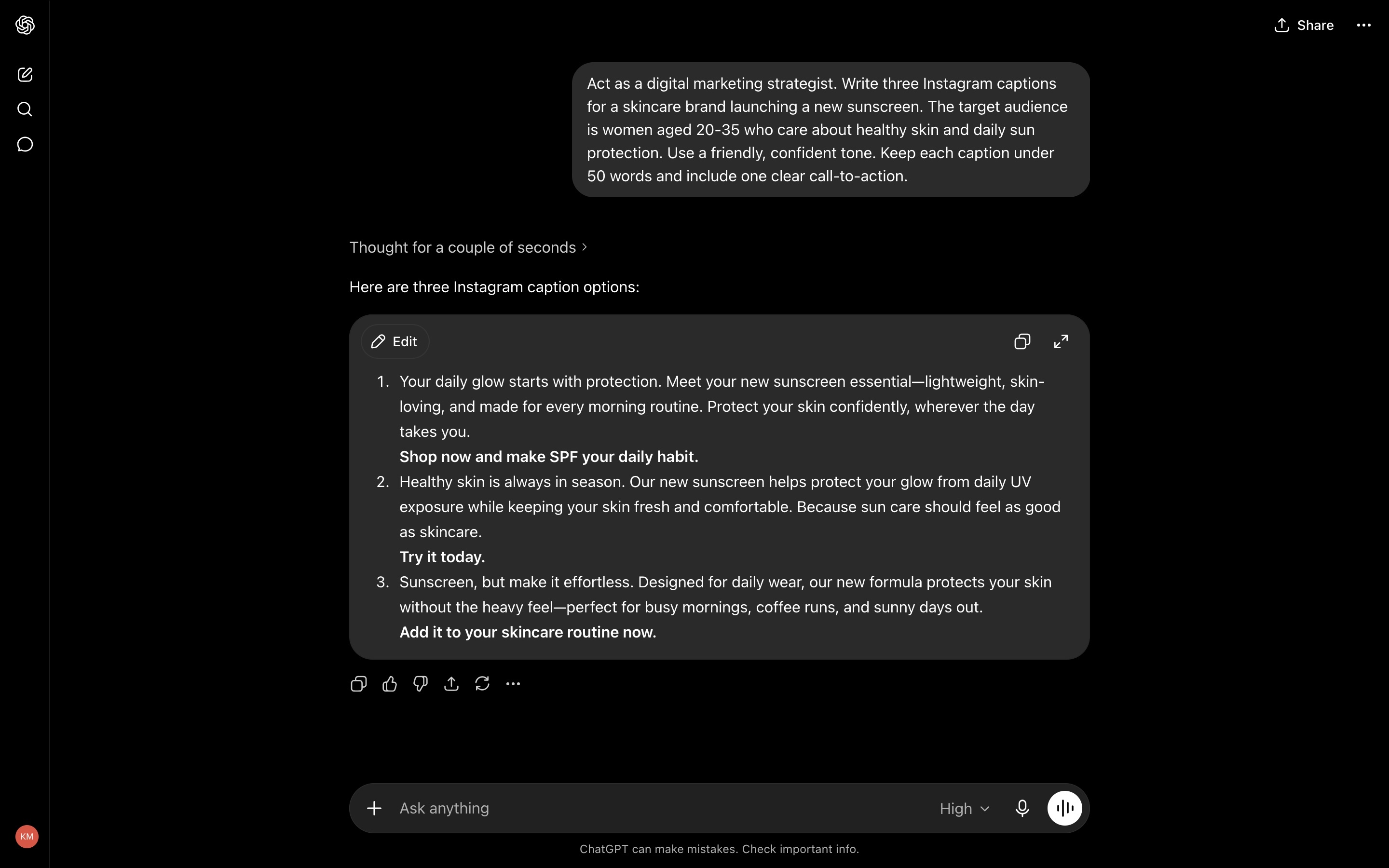
The second prompt works better because it gives ChatGPT a specific marketing direction. It explains the brand category, target audience, platform, tone, content length, and final output. This reduces guesswork and helps the AI produce content that is closer to what a real marketer needs.
A good marketing prompt should also include brand information. ChatGPT does not automatically know your brand personality, customer problems, campaign goals, or competitive positioning unless you provide them. If your brand is premium, youthful, professional, playful, or educational, say it clearly in the prompt.
Another important part is giving ChatGPT a clear task. Marketing has many different goals: awareness, engagement, lead generation, conversion, customer retention, or brand education. A caption for awareness should not sound the same as a sales email for conversion. The more specific the goal, the better the output.A strong prompt can also include examples. If you already have a caption, email, or ad style you like, paste it and ask ChatGPT to follow the structure without copying it. This helps maintain consistency across your marketing content.
Here is a simple formula marketers can use:
SIMPLE FORMULA
Act as [role].
I am creating [type of marketing content].
The goal is [campaign objective].
The target audience is [audience description].
The brand tone is [tone/personality].
Include [key message or offer].
Avoid [things you do not want].
Format the answer as [list/table/caption/email/etc.].
1. Start With a Clear Hook
A hook gives your content a clear direction. It does not have to be dramatic or overly clever; it simply needs to show why the message matters. For marketers, defining the hook before writing the prompt helps ChatGPT understand the main idea behind the content.
Without a hook, ChatGPT may produce content that sounds complete but feels too general. The message can lose focus because the AI does not know which angle to prioritize. A hook can be a customer problem, a useful insight, a common mistake, a product benefit, or a simple promise to the reader.
When the hook is clear, the prompt becomes stronger. It helps ChatGPT create content that is more organized, relevant, and aligned with the marketing goal. Instead of generating a broad draft, the AI can build the message around one focused idea.
2. Audience Clarity Is Essential
3. Brand Voice Protects Your Identity
Brand voice is another key factor. Without tone guidance, AI often defaults to common marketing language. This is why many AI-generated posts sound similar. They use the same phrases, the same structure, and the same polished but empty style.
A good prompt should clearly explain how the brand should sound. It may be professional, friendly, educational, confident, premium, warm, direct, or conversational.It should also explain what the brand should avoid. These boundaries help prevent generic phrases, exaggerated claims, and content that feels off-brand.
“Your brand is what people say about you when you’re not in the room.”
Jeff Bezos
The Founder of Amazon
4. Constraints Improve Creativity
A good ChatGPT prompt should also include constraints. Constraints are not limitations in a negative way. They are creative direction. They help the AI understand what not to do.
For example, a marketer may want to avoid overused words, long sentences, hard-selling language, or unrealistic promises. These instructions make the output sharper and more aligned with the brand.In many cases, telling ChatGPT what to avoid is just as useful as telling it what to include.
5. Customer Journey Matters
Another factor that improves prompt quality is customer journey awareness. Customers do not all stand at the same stage.Some are discovering the brand for the first time. Some are comparing options. Some are almost ready to buy. Some have already purchased and may return again.
A good prompt identifies where the customer is in that journey. This helps ChatGPT create messages that match the customer’s mindset. Awareness-stage content may focus on problems and education, while conversion-stage content may focus on benefits, proof, and action.
6. AI Output Is a First Draft
7. Human Judgment Makes Content Better
Marketing requires more than correct grammar. A message can be well-written but still feel wrong for the audience, the platform, or the brand. ChatGPT may produce content that sounds polished, but it may not always understand the emotional tone behind the message. This is where human judgment becomes important.
A marketer can recognize whether a message feels natural, relevant, and appropriate. For example, a campaign for a professional service may need a confident and clear tone, while a social media post for a lifestyle brand may need to feel warmer and more conversational. AI can suggest words, but the marketer decides whether those words fit the brand and the customer’s expectations.
Human review also helps remove content that feels too generic or too exaggerated. AI often uses common marketing phrases that may sound attractive but do not add much value. A marketer can refine those lines, add specific details, and make the message more grounded. This makes the content feel more trustworthy and less robotic.Good marketing depends on understanding people. A marketer knows the customer’s pain points, motivations, doubts, and decision-making process. By reviewing and improving AI-generated content, marketers can make sure the final message speaks to real customer needs instead of sounding like a general advertisement.
Human judgment also protects brand reputation. Before publishing, marketers should check whether the content is accurate, respectful, culturally appropriate, and aligned with the brand’s values. This final review helps prevent mistakes and makes the content stronger, clearer, and more professional.
8. Good Prompting Is Strategic Thinking
Effective prompting is not about using complex language or technical terms. It is about providing clear, structured direction. For marketers, a strong prompt should reflect the same strategic thinking used in campaign planning: defining the objective, understanding the audience, clarifying the message, choosing the appropriate tone, and identifying the desired action.
Prompting should be viewed as part of the marketing process, not as a separate task. Before asking ChatGPT to generate content, marketers should first understand the purpose of the work. Content created for brand awareness requires a different approach from content designed to generate leads or drive conversions. Similarly, an educational email, a product launch post, and a retargeting ad each require different messaging priorities.
Marketers do not need to become technical experts to write better prompts. However, they do need to think strategically. This means asking the right questions before creating content: Who is the target audience? What problem or need are they facing? What message should the brand communicate? What should the audience understand, feel, or do after reading the content? What tone is most appropriate for the brand and platform?
When these questions are answered within the prompt, ChatGPT receives clearer direction. Instead of producing broad or generic content, it can generate output that is more relevant to the campaign objective and audience context. A strategic prompt helps the AI understand what to prioritize, what to avoid, and how the final content should be structured.
Strategic prompting also helps maintain consistency across marketing channels. Customers may interact with a brand through social media, email, ads, blogs, landing pages, and customer communications. When prompts include brand voice, audience details, and campaign goals, the resulting content is more likely to remain aligned across these different touchpoints.
Ultimately, better prompting begins with better strategic thinking. ChatGPT can support speed, ideation, and content development, but the direction must come from the marketer. A clear prompt does not replace strategy; it translates strategy into instructions that AI can follow effectively.
9. Ground Every Prompt in Real Data Before You Ask AI to Generate Anything
A strong marketing prompt should be based on real information, not assumptions. Before asking ChatGPT to create content, marketers should provide the data and context that shape the message. This may include customer insights, product details, campaign goals, past performance, audience behavior, competitor positioning, frequently asked questions, or feedback from sales and support teams.
When prompts are grounded in real data, the output becomes more relevant and practical. ChatGPT can generate stronger content when it understands what customers actually care about, what problems they are trying to solve, and what messages have performed well in the past. Without this context, the AI is more likely to produce content that sounds polished but lacks accuracy, specificity, and strategic value.
Real data also helps reduce generic marketing language. For example, instead of asking AI to write about a product in broad terms, marketers can include specific benefits, customer pain points, objections, or proof points. This allows the AI to create content that is closer to the audience’s real needs and more aligned with the brand’s positioning.
Data does not always need to be complex. It can come from simple but useful sources such as customer reviews, website analytics, ad performance reports, survey responses, sales conversations, search queries, or social media comments. Even a small amount of reliable context can significantly improve the quality of the prompt and the usefulness of the output.
Grounding prompts in real data also improves accuracy and trust. AI may generate confident-sounding statements, but those statements are not always correct. By providing verified information upfront, marketers can guide the AI toward content that is more factually accurate and easier to review. This is especially important for blog posts, product pages, email campaigns, and advertising messages where incorrect claims can damage credibility.
Ultimately, better AI output starts with better input. The more relevant data marketers provide, the more useful the generated content becomes. ChatGPT should not be expected to invent the strategy. It should be used to support and develop ideas that are already informed by real customer insight, brand knowledge, and marketing evidence.
ChatGPT as an intelligent weapon for Marketers
ChatGPT is only as effective as the direction it receives. When prompts are vague, the output is often generic, inconsistent, and difficult to apply in a real marketing context. However, when marketers provide clear objectives, audience insight, brand voice, campaign context, constraints, and relevant data, AI can produce more focused and practical results.
Effective prompting should be treated as a strategic marketing skill. It is not simply about asking AI to generate content; it is about translating marketing objectives into clear instructions. ChatGPT can support ideation, drafting, message development, and content production, but it should not replace human judgment. Accuracy, brand alignment, emotional relevance, and strategic quality still require the marketer’s review.
The marketers who gain the most value from AI are those who use it with intention. They understand the audience, define the goal, provide meaningful context, and refine the output before publishing. In this sense, better prompting is better briefing. The clearer the input, the stronger the output, and the more useful ChatGPT becomes as part of a modern marketing workflow.
What is prompt engineering in marketing?
Prompt engineering in marketing is the practice of giving AI tools clear, structured instructions so they can produce more useful marketing output. It involves defining the audience, goal, tone, format, brand context, and key message before asking AI to generate content.
Why does ChatGPT sometimes produce generic marketing content?
ChatGPT often produces generic content when the prompt is too vague. If the prompt does not include details about the product, audience, platform, brand voice, or campaign objective, the AI has to guess. This usually leads to broad and repetitive content that does not feel specific to the brand.
What should a good marketing prompt include?
A strong marketing prompt should include the role, context, target audience, marketing objective, brand tone, key message, constraints, and desired output format. These details help ChatGPT understand what the content should achieve and how it should be written.
Can ChatGPT replace marketers?
No. ChatGPT can support marketers by helping with idea generation, first drafts, rewriting, and content planning. However, strategy, brand judgment, customer understanding, emotional intelligence, and final review still require human input.
Why is brand voice important in prompting?
Brand voice helps ensure that AI-generated content sounds consistent with the company’s identity. Without tone guidance, ChatGPT may use generic marketing language that does not match the brand’s personality or audience expectations.
Should marketers use real data in prompts?
Yes. Real data makes prompts stronger. Customer insights, product details, campaign performance, reviews, FAQs, and audience behavior help ChatGPT create content that is more accurate, relevant, and practical.
Is AI-generated content ready to publish?
Not always. AI-generated content should be treated as a first draft. Marketers should review the content for accuracy, tone, brand alignment, clarity, and relevance before publishing.
How can marketers get better results from ChatGPT?
Marketers can get better results by writing prompts that are specific, strategic, and grounded in real context. Instead of asking AI to simply “write content,” they should provide clear direction about the audience, goal, message, tone, and format.